
Global Childhood Immunization Rates Show Modest Improvement Despite Challenges: WHO and UNICEF Report

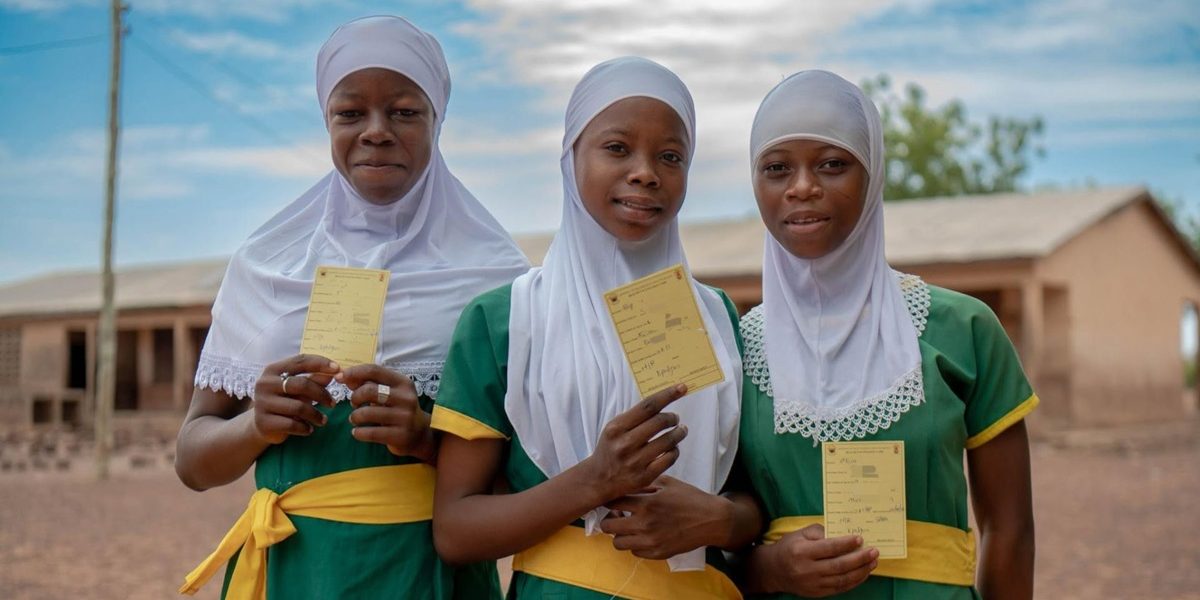
According to the World Health Organization (WHO) and UNICEF’s recent report, in 2025, 90% of infants worldwide, approximately 116 million, received at least one dose of the diphtheria, tetanus, and pertussis (DTP) vaccine. Furthermore, 85% of infants, around 110 million, completed the full three-dose series. Although these figures represent a one percentage point increase from the previous year, global immunization coverage remains one point below the levels observed in 2019, maintaining a similar range since 2009.
The data indicates that approximately 13.5 million “zero-dose” children did not receive any vaccines during their first year in 2025. Although this number is 750,000 fewer than the previous year, progress is hindered by an increasing number of children who begin the vaccination schedule but do not complete it. Most of these children reside in countries where immunization programs are supported by Gavi, the Vaccine Alliance.
Globally, an estimated 7.3 million infants received their first DTP dose but did not continue to the first measles dose. This dropout rate has contributed to stagnant measles coverage, with only 84% receiving the first measles dose (MCV1) and 77% receiving the second dose (MCV2). These figures fall short of the 95% threshold necessary to prevent outbreaks of this highly contagious disease, resulting in 57 countries experiencing significant measles outbreaks in 2025.
Challenges and Progress
UNICEF Executive Director Catherine Russell stated, “Governments and health workers have helped global vaccination rates recover after a significant decline during the COVID-19 pandemic. However, conflict, displacement, and poverty continue to leave millions of vulnerable children unprotected. Rebuilding trust in vaccines is essential, so no child suffers from a preventable disease.”
The report, covering 195 countries, reveals that 100 countries have maintained at least 90% coverage with three doses of the DTP vaccine since 2019, with little expansion in this group. Of the countries below 90% coverage in 2019, 30 showed improvement over the past six years, but 65 countries remain stagnant or are declining, including 13 identified as fragile, conflict-affected, or vulnerable (FCV).
Regions like the Americas and South-East Asia have fully recovered and even improved their performance beyond pre-COVID-19 levels, with the latter emerging as the best-performing region. Although Africa, the Eastern Mediterranean, and Europe have shown gains, their coverage has not yet returned to pre-pandemic levels. The Western Pacific region has experienced a decline, placing it significantly below its 2019 baseline.
Addressing Immunization Challenges
More than half of the zero-dose children live in FCV environments, which present unique challenges due to political instability, insecurity, or chronic underfunding. For instance, Syria experienced a 6-point drop in DTP1 coverage and a 12-point decline in MCV1 in a single year. Conversely, Sudan demonstrated significant improvement, increasing its DTP1 coverage by 35 percentage points and MCV1 by 22 points, highlighting the benefits of improved access to healthcare services even amidst ongoing conflict.
In middle- and high-income countries, immunization coverage is eroding despite vaccine accessibility, due to shifting political commitments, structural challenges, and rising vaccine hesitancy. For example, South Africa’s DTP1 coverage has decreased by 20 percentage points since 2019, continuing to fall in 2025. Bosnia and Herzegovina experienced a 23-point drop in MCV1 coverage after a significant rise the previous year.
Dr. Tedros Adhanom Ghebreyesus, WHO Director-General, emphasized, “Every child, regardless of their circumstances, deserves the protection that vaccines offer. Immunization remains one of the most cost-effective and equitable interventions for safeguarding children’s health.”
Future Initiatives and Recommendations
Over the past 25 years, sustained governmental and partner investments, community commitments, and strong public trust have reduced the number of zero-dose children by 40%. In Gavi-supported countries, children are now protected against more diseases than ever, with an average coverage of 74% for a full course of WHO-recommended vaccines.
Dr. Sania Nishtar, CEO of Gavi, stated, “Lower-income countries’ historic immunization levels illustrate what can be achieved through collective effort. As we enter a new five-year period, maintaining this progress amid funding constraints, geopolitical uncertainty, and increasing outbreaks is our greatest challenge.”
The foundations that supported progress are under strain. Cuts to international health financing observed over the last two years are not yet fully reflected in these estimates, but the data systems needed to monitor and mitigate these impacts are also under pressure. Only 18 national immunization surveys were conducted and submitted this year, down from 50 in 2024 and an average of 33 per year between 2015 and 2019. Without robust data systems to identify and reach children missing vaccinations, preventable outbreaks and deaths may occur.
WHO and UNICEF, in collaboration with Gavi and other partners, are pursuing the global Immunization Agenda 2030 (IA2030) to ensure vaccines reach everyone, everywhere, at any age. To correct the current trajectory and close critical gaps, WHO and UNICEF urge governments and partners to:
- Strengthen immunization efforts in conflict and fragile settings to reach and retain children.
- Counter misinformation about vaccines and fully support initiatives to increase vaccine uptake.
- Increase and sustain funding for immunization programs both domestically and globally, with continued support for Gavi.
- Invest in stronger data and disease surveillance systems to guide high-impact immunization program improvements.
For any health-related concerns or before making decisions based on this information, please consult a healthcare provider.


