Hears EarPlugs Claims Evaluated: Effective Noise Reduction Ear Plugs for Safe Hearing Protection


A company-issued report from Hears outlining how its earplugs are described in official materials, including references to what the company calls “effective noise reduction,” product design features, pricing structure, and general hearing protection positioning for 2026
New York, NY, March 18, 2026 (GLOBE NEWSWIRE) — This report contains affiliate links. If a purchase is made through these links, a commission may be earned at no additional cost to the buyer. This report is based on the company’s own published materials and does not constitute medical, audiological, or professional advice. All product details described below are stated as presented by the company and should be verified directly on the official website before any purchasing decision.
Hears has released a company-issued report detailing how its earplugs are presented across official materials, including references to what the company describes as “effective noise reduction” and their intended role in everyday hearing protection scenarios. The report outlines the product’s technology positioning, pricing structure, return terms, and the company’s explanation of how its high-fidelity attenuation filters are designed to work.
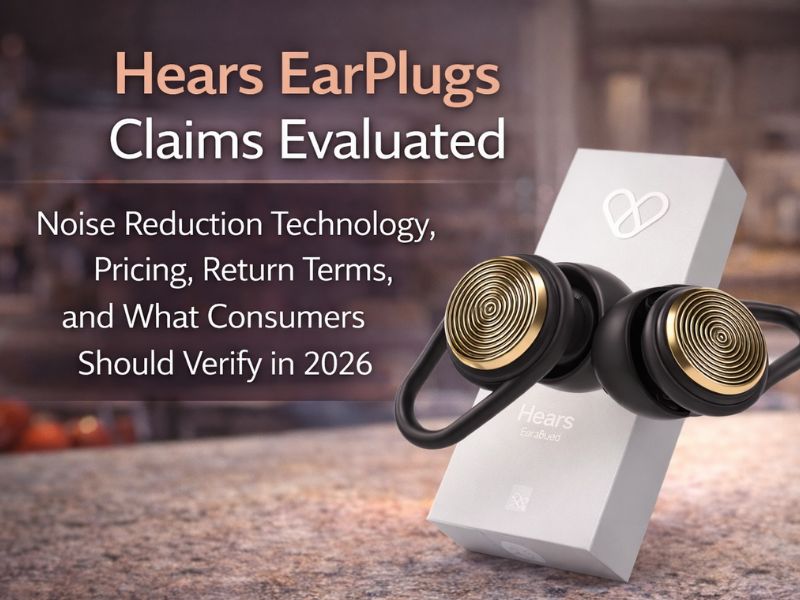
In this context, “claims evaluated” refers to how Hears presents and explains its product based on publicly available company materials. This report is issued by Hears and reflects the company’s own descriptions. It does not constitute an independent product review, third-party laboratory evaluation, or endorsement. No published independent test report appears to evaluate Hears earplugs under standardized NRR (Noise Reduction Rating) testing protocols as of this writing.
Readers can access the company’s official report and supporting materials directly through Hears’ published resources, where product descriptions, usage guidance, and positioning statements are outlined by the company. The company’s published materials and current offer details are available by View the current Hears offer (official Hears page).
This company-issued report summarizes how Hears describes its earplugs in public-facing materials, where those descriptions fit within general hearing protection context, and which details consumers may wish to verify directly through the company’s published specifications and policies before ordering.
Individual experiences vary. Hearing protection performance depends on fit, ear anatomy, environment, and proper insertion. Consult a qualified audiologist or healthcare professional if you have hearing health concerns.
What Are Hears Earplugs and Who Makes Them
Hears earplugs are consumer-grade, reusable noise-reducing earplugs designed for concerts, travel, sleep, workplace noise, and daily environments where sound levels may be uncomfortable or potentially damaging. According to the company’s materials, they are not hearing aids, not electronic noise-canceling devices, and are not marketed as medical devices.
The company behind the product is Hears, headquartered at Koningsplein 1, Amsterdam, Noord-Brabant, NL, 1017BB. The offer page at buyhears.com operates through a partnership with GiddyUp, which the site describes as a curator of innovative products. This means the purchasing experience at buyhears.com is managed through GiddyUp’s commerce infrastructure, while Hears handles product fulfillment and customer support. The company’s published materials and current offer details are available by View the current Hears offer (official Hears page).
One important distinction worth noting: Hears products are available through both the buyhears.com offer page and the official brand site at hears.com. According to the company’s published materials, pricing and bundle structures may differ between the two storefronts. The affiliate link in this report directs to buyhears.com. Always verify current pricing on the specific site you intend to purchase from before completing your order.
What Hears Describes as Its Core Technology
According to the company’s published product materials, Hears earplugs use what the company describes as premium-grade, high-fidelity attenuation filters that go beyond traditional foam earplugs. The company states these filters reduce harmful noise by up to 20dB while preserving approximately 93% of natural sound quality. The company also describes the filter technology as effectively acting as a second set of eardrums by diminishing sound vibration energy.
These are the specific performance descriptions that appear on the product page. Here is what each one means in practical terms:
The 20dB reduction description. A 20-decibel reduction is a meaningful amount of noise attenuation. For context, a 10dB reduction is generally perceived as cutting loudness roughly in half. A 20dB reduction, if achieved consistently, would bring a 110dB concert environment down to approximately 90dB — still loud, but below the threshold where short-term exposure typically causes immediate concern. However, the company’s materials reference this figure without disclosing a standardized Noise Reduction Rating (NRR) or Single Number Rating (SNR) on the buyhears.com offer page reviewed for this report. NRR and SNR are the industry-standard metrics used to compare hearing protection products, and they are determined through standardized laboratory testing. Without a published NRR or SNR, consumers cannot directly compare this product’s stated attenuation performance against other products using the same measurement standard.
The 93% sound preservation description. This figure appears prominently in the company’s materials. The company does not disclose the specific testing methodology or measurement standard behind this percentage on the reviewed product page. In hearing protection science, sound quality preservation is typically assessed through frequency response curves that show how evenly attenuation is distributed across the audible spectrum. High-fidelity earplugs aim for relatively flat attenuation — reducing all frequencies by a similar amount rather than disproportionately cutting certain ranges. Whether Hears achieves flat attenuation would require published frequency response data, which does not appear on the buyhears.com offer page.
The “second eardrum” language. The company describes its filter as acting like a second set of eardrums by diminishing sound vibration energy. This is a consumer-facing analogy the company uses to explain how the filter attenuates noise. It should be understood as a marketing description of the product’s mechanism, not a clinical or scientific classification of how the filter functions.
What the Hears Report Does and Does Not Claim
This is worth being direct about, because it shapes how everything else in this report should be read.
What the company’s materials DO describe: Hears positions its earplugs as offering what the company calls “effective noise reduction” through patented high-fidelity attenuation filters. The materials describe the product as reducing noise by up to 20dB, preserving approximately 93% of natural sound, and being developed alongside audiologists and hearing protection specialists. The company describes these as consumer hearing protection products — not hearing aids, not medical devices, and not electronic noise-canceling technology.
What the company’s materials do NOT include: No independent laboratory testing results under standardized NRR or SNR protocols appear in the company’s publicly available materials reviewed for this report. No third-party clinical evaluation of the finished product’s attenuation performance is referenced. No specific audiologist names or institutional affiliations are disclosed in connection with the development claims. No standardized frequency response data is published on the reviewed offer page.
This does not mean the product fails to perform as described — it means the specific performance descriptions are company-stated rather than independently verified. Consumers who want to compare attenuation performance across products using standardized measurements should contact Hears directly to request NRR or SNR data, or seek independent published testing and third-party attenuation data generated under controlled conditions.
How High-Fidelity Earplugs Differ From Foam Plugs
Traditional foam earplugs create a physical seal that blocks sound waves. They typically offer higher maximum noise reduction (NRR ratings often between 25 and 33dB) but attenuate unevenly across frequencies, which is why music and speech tend to sound muffled or distorted through them. High-fidelity earplugs use acoustic filters that reduce intensity more evenly across the spectrum. Several established products operate in this category, with varying filter designs and different levels of published testing data. Published NRR or SNR ratings allow consumers to compare attenuation across products using the same measurement framework, which is why the presence or absence of standardized ratings matters when evaluating any earplug’s stated performance.
The company states that Hears was developed alongside “world-class audiologists and hearing protection specialists” and describes its technology as patented. These are company descriptions — this report has not independently verified the specific professionals involved. The company also positions its product as superior to both foam plugs and other premium earplugs through a comparison chart on its website. That chart reflects the company’s marketing positioning, not independent third-party testing.
Hearing Protection Context Consumers Should Know
Noise-induced hearing damage is cumulative and real. According to published guidance from the National Institute on Deafness and Other Communication Disorders (NIDCD), prolonged or repeated exposure to sounds at or above 85 decibels can cause hearing damage. Concert environments commonly reach 100 to 115dB. The company’s statement that two minutes at 110-115dB can cause permanent hearing damage aligns with published audiological guidance, though specific risk depends on individual factors.
Fit matters as much as filter quality. Even the most advanced earplug provides minimal protection if it does not seal properly in the ear canal. This is why Hears includes four ear tip sizes and why proper insertion technique matters regardless of which product you choose. No earplug eliminates all risk. Hearing protection reduces exposure but does not make extremely loud environments completely safe for unlimited durations.
Who Hears May Be Designed For
Concert and festival attendees seeking sound clarity: If you regularly attend live music events and have been frustrated by foam earplugs that muffle the music you paid to hear, a high-fidelity earplug in this category may be worth looking into. Hears positions itself specifically for this use case.
People managing noise sensitivity in daily environments: The company markets Hears for use in busy offices, restaurants, during travel, and for sleep. If everyday noise levels cause discomfort or difficulty concentrating, a moderate-attenuation earplug may help reduce environmental volume without complete isolation.
Parents and caregivers in loud environments: The company specifically mentions managing loud environments involving children. A 20dB reduction, if achieved as stated, would meaningfully reduce the impact of sudden loud sounds while maintaining awareness of your surroundings.
Frequent travelers: Aircraft cabins, transit systems, and road trips generate sustained noise that can contribute to fatigue. The company markets Hears as a travel companion, and the carrying case and compact size support this use case.
Situations Where Other Products May Be More Appropriate
Maximum noise reduction is the priority: If your primary concern is blocking as much sound as possible — for example, when operating heavy machinery or working in construction — traditional foam earplugs or over-ear hearing protection with higher NRR ratings may be more appropriate. High-fidelity earplugs typically offer lower maximum attenuation in exchange for sound quality preservation.
Verified NRR ratings are required for workplace compliance: Some occupational safety requirements specify minimum NRR-rated hearing protection. If your employer or industry requires documented NRR-rated protection, verify whether Hears publishes a standardized NRR or SNR before purchasing for that purpose.
Electronic noise-canceling is preferred: Active noise-canceling earbuds use electronic processing to reduce ambient sound. They offer different capabilities, including music playback and adjustable transparency modes. They also require charging, cost significantly more, and work through a fundamentally different mechanism than passive filter-based earplugs.
Questions to Consider Before Ordering
Before ordering Hears or any hearing protection product, consider what environments you most need protection for, how important sound clarity is versus maximum blocking, whether you need protection that meets specific workplace NRR requirements, and whether you are comfortable with international return shipping logistics. These factors help determine which product characteristics matter most for your situation.
Hears Pricing and Purchase Structure
According to pricing information published on the buyhears.com offer page at the time of this report, Hears earplugs are marketed with a promotional discount described as 40% off. The site presents pricing in a bundle format, though specific price points and bundle configurations may change. All pricing should be verified directly through View the current Hears offer (official Hears page), as promotional pricing is subject to change without notice.
According to the offer page, purchases are described as one-time payments with no subscriptions or automatic rebilling. The site states that the product includes free shipping on qualifying offers within the United States, with international shipping also available. Shipping times are stated as 24 to 48 hours for order processing, with delivery typically within three to five business days domestically, per the company.
The purchase is facilitated through the buyhears.com storefront in partnership with GiddyUp. Customer support and product fulfillment are handled by Hears directly.
Hears Return Policy and 100-Day Guarantee
According to the company’s published return policy (last updated January 7, 2026), Hears offers a 100-day return window from the date of receiving the product. The policy states that even used earplugs are eligible for return, provided all parts are complete and in their original state.
There are practical considerations worth understanding before ordering. According to the published return policy, customers are responsible for the cost of return shipping unless the return is due to a company error, such as receiving an incorrect, defective, or damaged item. Given that Hears is headquartered in Amsterdam, Netherlands, international return shipping costs for US-based buyers could be a meaningful factor. The company’s policy states that they will email the return shipping cost for approval before proceeding, and that approved return costs are deducted from the refund.
The refund process, according to the published terms, takes approximately seven business days after the returned item is received and inspected, with additional time depending on the buyer’s financial institution. Refunds are processed to the original payment method minus the agreed return shipping cost.
These are standard return logistics worth understanding before ordering, particularly for international orders. Review the complete and current return policy on the official website before placing an order.
What the Company’s Product Page Displays About Ratings
The buyhears.com offer page prominently displays marketing language including “Rated 4.9/5 Stars With 3,400+ Reviews” and “200,000+ Happy Hears Users.” These figures are presented as part of the company’s marketing materials.
Several contextual points are worth noting. The specific numbers referenced on the offer page have not been independently verified for this report. The company’s Terms of Service include a disclosure stating that testimonials do not represent the generally expected user experience. Third-party consumer feedback platforms show a range of experiences, including positive responses regarding sound quality and comfort as well as concerns about shipping timelines and return processing.
As with any product, consumers who leave feedback represent a self-selected group. Satisfied customers are generally more likely to share their experiences than those with neutral outcomes. This does not invalidate the feedback, but it means aggregate ratings should be interpreted with that self-selection factor in mind.
Durability, Materials, and Charitable Connection
According to the company, Hears earplugs are built with durable, body-safe, hypoallergenic materials designed to resist sweat, dirt, and extended use. The company markets the product as reusable for years with proper care. Each pair includes four ear tip sizes (XS, S, M, L) and a carrying case. The company also states that a portion of every purchase supports the Hearing Health Foundation — consumers can verify this directly with the organization if the charitable component is a factor in their decision.
Consumer Verification Checklist: What to Confirm Before Ordering
Verify standardized attenuation ratings. Check whether the company publishes an NRR or SNR rating. These standardized metrics allow direct comparison with other hearing protection products. If they are not published on the product page, contact the manufacturer to request this information.
Understand the two-storefront structure. Hears products are available through buyhears.com (in partnership with GiddyUp) and hears.com (the company’s direct site). Pricing and bundle structures may differ between the two. Verify which site you are ordering from and confirm current terms on that specific storefront.
Factor in return shipping logistics. If you are ordering from the United States, review the return shipping terms carefully. Returns are shipped to the company’s Amsterdam address, and return shipping costs are the customer’s responsibility unless the error was on the company’s end.
Separate company marketing from independent testing. The comparison chart on the product page reflects the company’s own positioning, not independent third-party testing results. If head-to-head performance data matters to you, seek independent published testing or third-party attenuation data generated under controlled conditions.
Consult a professional if you have hearing concerns. Earplugs are hearing protection products, not hearing treatment devices. If you have existing hearing loss, tinnitus, or other audiological concerns, consult a qualified audiologist before relying on any consumer earplug for hearing protection.
The company’s published materials, current pricing, and full product details are available by View the current Hears offer (official Hears page).
Consumer Questions About Hears Earplugs
Will Hears earplugs make music sound muffled?
According to the company, the high-fidelity attenuation filter is designed to reduce volume evenly across frequencies rather than disproportionately cutting certain ranges the way foam plugs typically do. The company states that music, voices, and environmental sounds remain clear at reduced volume. Whether the product achieves truly flat attenuation would require published frequency response data, which consumers can request from the manufacturer.
How do I know what size will fit my ears?
Each pair includes four ear tip sizes (XS, S, M, L), per the company. The company’s FAQ states that most people find their ideal fit by trying the different sizes. Proper fit is important not just for comfort but for achieving the product’s stated attenuation performance, since an incomplete seal reduces noise reduction effectiveness.
Can I still have conversations while wearing them?
The company states that the filter design maintains clarity in speech frequencies while reducing background noise. Individual results depend on the specific noise environment, conversation volume, and earplug fit.
Are Hears classified as medical devices or hearing aids?
According to the company’s published materials, Hears are not hearing aids, not electronic noise-canceling devices, and are not marketed as medical devices. They are consumer hearing protection products designed to reduce environmental noise for people with normal hearing who want protection.
Where is Hears based, and does that affect returns?
The company is headquartered in Amsterdam, Netherlands. US-based buyers should factor in international return shipping costs when reviewing the company’s published return terms, as customers are responsible for return shipping unless the return is due to a company error.
How does Hears compare with other high-fidelity earplug products?
Several established products operate in the high-fidelity earplug category, each with different filter designs, pricing structures, and published specifications. The most reliable comparison method is through standardized NRR or SNR ratings and independently published frequency response data. Company-created comparison charts reflect each manufacturer’s own marketing positioning rather than independent testing results.
Summary of Key Considerations
Hears is a consumer noise-reducing earplug marketed for concerts, travel, sleep, and daily noise management. The company describes the product as offering what it calls “effective noise reduction” of up to 20dB with 93% sound preservation — figures outlined in the company’s published materials. Whether the product achieves these under standardized testing would require published NRR or SNR ratings, which did not appear on the buyhears.com offer page reviewed for this report.
The product includes a 100-day return window, four ear tip sizes, and is marketed as reusable for years. The company is Amsterdam-based, which affects return shipping logistics for US buyers.
Consumers who want to review the full product details, current pricing, and published terms can do so by View the current Hears offer (official Hears page).
Contact Information
According to the company’s published contact information:
Company: Hears
Email: [email protected]
Address: Koningsplein 1, Amsterdam, Noord-Brabant, NL, 1017BB
Partnership: buyhears.com operates in partnership with GiddyUp
Disclaimers
Content and Consumer Information Disclaimer: This report is based on product descriptions, specifications, and policy terms published by Hears on its publicly available website and product materials. It does not constitute an independent product review, third-party laboratory evaluation, medical advice, audiological guidance, or endorsement. This content has not been independently audited or verified unless specifically noted. Readers are encouraged to verify all claims directly with the manufacturer and to consult a qualified healthcare professional or audiologist before making hearing protection decisions.
Hearing Protection Notice: No earplug eliminates all risk of noise-induced hearing damage. Hearing protection products reduce noise exposure but do not guarantee safety in all environments or at all durations. Individual hearing protection needs vary based on noise levels, duration of exposure, ear anatomy, product fit, and baseline hearing health. Consumers with existing hearing conditions should consult a qualified audiologist before selecting hearing protection. Proper insertion and fit are essential for any earplug to achieve its intended attenuation performance.
Results and Product Variability: All pricing, bundle configurations, shipping terms, and return policies referenced in this report are based on information published on the buyhears.com offer page at the time of writing and may change without notice. Pricing and bundle structures may differ between buyhears.com and hears.com. Consumers should verify current terms on the specific site they intend to purchase from before completing any order.
FTC Affiliate Disclosure and Publisher Responsibility: This report contains affiliate links. If a product is purchased through these links, a commission may be earned at no additional cost to the buyer. The publisher of this report is not responsible for typographical errors, manufacturer changes to the product after publication, or individual consumer outcomes. All product descriptions and performance references are attributed to the company’s published materials and have not been independently verified by the publisher unless specifically noted.
CONTACT: Email: [email protected]
 Disclaimer: The above press release comes to you under an arrangement with GlobeNewswire. UKNewshour.com takes no editorial responsibility for the same.