
Hume Health Hume Body Pod Claims Evaluated: Researching Accuracy Details & Comparison Versus Other Leading Bathroom Scales


This 2026 informational report from Hume Health outlines the company’s published Hume Body Pod accuracy positioning, 8-electrode BIA measurement methodology, 45+ body composition metrics, AI-powered health insights, pricing structure, and how this body composition device category differs from standard bathroom scales based on the company’s materials
Wilmington, DE, March 30, 2026 (GLOBE NEWSWIRE) — This article is for informational purposes only. It is not medical advice. If you purchase through links in this article, a commission may be earned at no additional cost to you. All product details described below are stated as presented by Hume Health and should be verified directly on the official website before any purchasing decision.
Hume Health presents key details related to the Hume Body Pod, including the product’s published accuracy positioning, 8-electrode body composition measurement approach, and app-connected tracking features. The information below describes how the Body Pod is presented within the company’s materials, including its reference to 45+ body composition metrics and third-party-referenced accuracy data, as well as how this category of device differs from standard bathroom scales.
In this context, “researching accuracy details” refers to a structured overview of Hume Health’s published product information and materials, rather than an independent third-party evaluation or endorsement. References to “comparison” reflect general category differences between body composition devices and standard bathroom scales as described in product materials, rather than head-to-head competitive rankings.
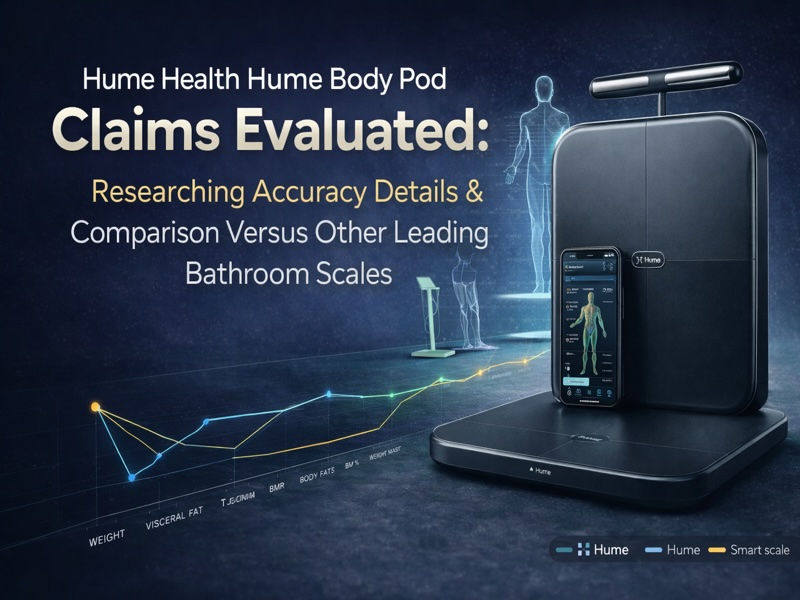
There is growing consumer interest in body composition tracking beyond scale weight, including metrics such as fat mass, muscle distribution, visceral fat, and metabolic indicators. Body composition tracking is commonly used in contexts such as weight management, training monitoring, and broader health awareness — the following information provides context for understanding how the Body Pod may be positioned within different user scenarios.
Current product details, pricing, and terms can be confirmed on the official website: View the current Hume Body Pod offer (official Hume Health page).
Individual results vary. Body composition devices provide estimates based on bioelectrical impedance and should not replace clinical assessments. Consult a qualified healthcare provider before making health decisions based on any consumer device readings.
What Is the Hume Health Body Pod
The Hume Body Pod is a consumer body composition analyzer from Hume Health LLC, a health technology company registered in Delaware with offices at 1007 North Orange Street, Wilmington, DE 19801. Hume Health materials describe the device as using 8-electrode bioelectrical impedance analysis (BIA) across multiple frequencies to measure over 45 body composition metrics — including body fat percentage, skeletal muscle mass, visceral fat, bone density, metabolic age, and intracellular and extracellular body water.
The Body Pod is positioned as a step above standard consumer smart scales. Hume Health’s published product information describes the device as performing direct segmental measurement — analyzing the left arm, right arm, torso, left leg, and right leg independently rather than estimating the body as a single unit. Each measurement session is described as including 64 individual bioelectrical impedance scans across different frequencies and sensor pathways.
The device pairs with the Hume Health App, which the company describes as translating raw body composition data into personalized insights, weekly health reports, and AI-powered coaching recommendations. The app provides what Hume Health calls a Health Score — a composite metric that synthesizes multiple physiological inputs into a single progress indicator designed to answer one core question: “Am I moving in the right direction?”
Hume Health was co-founded by Jeffrey Lee, with Julian Hunt serving as VP of Product. The company’s stated mission is to make clinical-grade health data accessible and actionable for home use.
The 98% DEXA Accuracy Positioning: What the Published Materials Describe
The most prominent product positioning associated with the Hume Body Pod is its stated “98% DEXA-level accuracy.” This figure appears throughout the company’s product page and marketing materials. Hume Health materials describe this accuracy figure as having been third-party verified by an entity called Socotech. The company’s FAQ section states the Body Pod was shown to be within ±3% accuracy of a DEXA scan.
The following context helps clarify what that means in practice.
DEXA (Dual-Energy X-ray Absorptiometry) is widely considered the clinical gold standard for body composition analysis. DEXA scans use low-dose X-rays to differentiate between bone, lean tissue, and fat tissue. Clinical DEXA scans typically cost between $50 and $150 per session and require an appointment at a medical imaging facility.
Bioelectrical Impedance Analysis (BIA) is the technology the Hume Body Pod uses. BIA works by sending safe, low-level electrical currents through the body and measuring how those currents travel through different tissue types. Water, muscle, fat, and bone all conduct electricity differently, which allows the device to estimate body composition.
Published research on BIA technology has demonstrated that multi-frequency, multi-electrode BIA devices — the category the Hume Body Pod is described as occupying — can produce body composition estimates that correlate reasonably well with DEXA results in many populations. However, several factors affect accuracy across all BIA devices, including hydration status, recent food intake, time of day, skin temperature, and the specific algorithms used to convert impedance data into body composition estimates.
The 98% accuracy figure is presented in Hume Health’s materials as a product positioning reference point. The third-party verification is attributed to Socotech. The full study methodology and results may be available from the company for those seeking additional detail on how the figure was derived.
Hume Health materials describe the Body Pod as offering “98% DEXA-level accuracy,” referencing third-party validation included in the company’s published product information. This positioning is presented as stated — it is not independently confirmed or disputed here. The context above is provided for a full understanding of what BIA technology delivers relative to clinical DEXA scanning.
How the Hume Body Pod Technology Works
Hume Health’s published technical materials describe the Body Pod as using three primary technological layers to generate its measurements:
8-Point Electrode System: The device includes eight contact sensors — four on the platform (feet) and four on the handheld grips. Hume Health materials indicate this enables multiple electrical pathways through the body, supporting segment-level measurement rather than whole-body averaging. You step onto the platform barefoot and grip the handles while standing upright.
Direct Segmental Measurement: The Body Pod is described as measuring the left arm, right arm, torso, left leg, and right leg separately. This is a meaningful distinction from standard bathroom scales, which typically send current only through the feet and estimate upper-body composition using algorithms rather than direct measurement. Published BIA research supports the general principle that segmental measurement provides more detailed body composition data than whole-body estimation.
Multi-Frequency BIA Sensors: The company describes using multiple electrical frequencies during each scan. Published research on BIA methodology shows that lower frequencies primarily measure extracellular water, while higher frequencies penetrate cell membranes to measure intracellular water. Multi-frequency BIA is generally considered more capable than single-frequency devices at distinguishing between different tissue compartments.
The company also references an “aerospace-derived Kalman filtering” system used to synthesize raw impedance data, reduce measurement noise, and stabilize readings over time. Kalman filtering is a well-established mathematical technique used in signal processing across industries including aerospace, navigation, and medical devices.
A complete measurement takes approximately 60 seconds, as described in the product materials. A separate 2026 informational overview of the Hume Body Pod’s 8-electrode BIA approach and 45 body composition metrics provides additional detail on how the measurement technology is described in the company’s materials.
Who the Hume Body Pod Is Described As Being Designed For
Based on the product’s published positioning and feature set, the following outlines several categories of users the Body Pod may be relevant for:
If you’re tracking weight loss and want more than a single number: The scale alone doesn’t tell you whether you’re losing fat, muscle, or water. Body composition tracking can reveal whether your approach is preserving the lean tissue that supports your metabolism — which is particularly relevant if you’re on a calorie-restricted diet or a GLP-1 medication program.
If you’re training and want to monitor muscle development: Segmental body analysis can show whether growth is balanced across body regions and whether your training adjustments are producing measurable changes in lean mass.
If focused on metabolic health and longevity: Visceral fat — the fat stored around internal organs — is a recognized marker of metabolic risk that standard scales cannot measure. The Body Pod’s described ability to estimate visceral fat levels is described within contexts such as long-term metabolic health monitoring.
If your household has multiple people who want to track: The device is described as supporting up to 24 user profiles, making it a potential option for families or shared living situations.
Considerations for people who may prefer other options:
If you need clinical-grade diagnostic data: BIA devices — regardless of brand — are estimation tools. If you need diagnostic-level body composition data for medical decision-making, a clinical DEXA scan or hydrostatic weighing remains the standard a healthcare provider would typically recommend.
If you’re looking for the lowest-cost smart scale option: At its published price point, the Hume Body Pod is positioned above basic consumer smart scales. If your primary need is weight tracking with basic body fat estimation, less expensive options exist in the market.
If you have a cardiac implantable electronic device: The company’s FAQ states that BIA technology has been widely used for over 20 years and references studies showing no interference with CIEDs implanted after 1992. However, anyone with a pacemaker, ICD, or similar device should consult their cardiologist before using any bioelectrical impedance device.
General considerations referenced in product usage scenarios include measurement consistency (the company notes that morning weigh-ins produce the most reliable trend data), the extent to which app features and weekly health reports would be utilized versus basic scale functionality, and whether the price point is proportionate to the frequency and depth of metric tracking intended. These factors may help frame whether the Body Pod’s feature set aligns with a particular use case.
Category Context: Body Composition Devices and Standard Bathroom Scales
The following outlines general differences between standard bathroom scales and body composition tracking devices such as the Hume Body Pod, focusing on measurement scope, data output, and intended use based on product descriptions and category characteristics.
Clinical DEXA Scans: DEXA remains the recognized gold standard for body composition analysis. It provides highly accurate segmental measurements of bone density, lean tissue, and fat tissue. However, DEXA scans require appointments at medical imaging facilities, typically cost between $50 and $150 per session based on published industry data, and expose the user to a small amount of ionizing radiation. For most people, DEXA is a periodic check-in tool rather than a daily tracking method.
Standard Consumer Smart Scales (Single-Frequency BIA): Most consumer smart scales in the $30 to $100 range use single-frequency BIA with electrodes only in the foot platform. These devices estimate body fat percentage and sometimes muscle mass, but they send electrical current primarily through the lower body and use algorithms to estimate upper-body composition. Published BIA research generally indicates that foot-only, single-frequency devices are less accurate for segmental analysis than multi-electrode, multi-frequency systems.
Advanced Consumer BIA Analyzers (Multi-Frequency, Multi-Electrode): This is the category the Hume Body Pod is described as occupying. Devices in this tier use hand-held electrodes in addition to foot sensors, multiple electrical frequencies, and segmental measurement to generate more detailed body composition data. Published research suggests that these devices can produce estimates that correlate more closely with DEXA results than single-frequency, foot-only devices, though individual results still vary based on hydration, measurement conditions, and device-specific algorithms.
Hume Health’s comparison materials position the Body Pod at a price point significantly below professional medical-grade BIA analyzers (which the company references at approximately $25,000) while describing features the company states are comparable to clinical-grade analysis. Other consumer smart scales are referenced by the company at approximately $80 with approximately 89% accuracy.
The Hume Health App and AI Health Intelligence
The Hume Body Pod is designed to work as part of a system that includes the Hume Health App. The app is described as free to download with basic features, while a premium subscription tier called Hume Plus unlocks additional capabilities including comprehensive weekly health reports, personalized health insights, and AI-driven recommendations.
The app provides what Hume Health describes as a Health Score — a composite metric that synthesizes body composition data into a single indicator. The app also connects with wearable device data and phone-collected data to incorporate sleep, activity, and behavioral patterns into its analysis. The premium tier is described as including personalized health programs and daily feedback based on the user’s data. Hume Health also offers a companion wearable device — a 2026 informational overview of the Hume Band’s continuous health monitoring features outlines how the wearable integrates with the Body Pod ecosystem.
Worth noting: the premium app subscription represents an additional ongoing cost beyond the hardware purchase. A premium subscription is not required to use the basic weighing and body measurement features, but advanced reporting and coaching features are reserved for paying subscribers. Subscription pricing details, terms, and cancellation policies should be confirmed on the official app or website before subscribing.
The company’s subscription terms indicate that cancellation must be made at least 24 hours before the next renewal date to avoid being charged for the next billing cycle. Cancellation is processed through the platform where the subscription was originally purchased — Apple’s App Store for iOS users, or Google Play for Android users.
Hume Body Pod Pricing and Purchase Details
Pricing information published on the official Hume Health website at the time of this report lists the Hume Body Pod at a promotional price of ₱14,625 (Philippine Pesos), reduced from a listed original price of ₱22,500. A payment plan is also described as 18 payments of approximately ₱812.50.
The purchase is described as including free global shipping, a free app download, and unlimited free scans with the device. The product page describes a 1-year standard warranty covering product defects, with an optional 10-year extended warranty available.
Hume Health accepts payment through Visa, Mastercard, American Express, Discover, PayPal, and Klarna. Pricing, promotional offers, and availability can change — View the current Hume Body Pod offer (official Hume Health page).
Hume Body Pod Return Policy and 45-Day Trial
Hume Health’s published refund policy describes a 45-day return window from the date of delivery. The company describes this as a trial period.
Key terms from the published return policy: returns must be initiated by contacting customer support at [email protected] before sending the device back. Returns sent without prior authorization are described as not being accepted or processed. The device must be in its original packaging and in like-new condition. The purchase must have been made directly from Hume Health. Customers are described as being responsible for return shipping costs unless the product is determined to be defective through troubleshooting. Refunds are described as typically processing within 5 to 7 business days once approved, with funds appearing in the account within 7 to 10 business days depending on the financial institution.
Full return policy details are available on the official website for review prior to purchase. Retaining all purchase confirmation details is advisable. Order cancellations can be requested by contacting customer support immediately after placing the order, though once an order has been dispatched and a tracking number issued, cancellation may not be possible.
Understanding BIA Technology: Published Research Context
Bioelectrical impedance analysis has been studied extensively in published peer-reviewed research. Understanding what the published literature supports provides helpful context for interpreting the technology the Hume Body Pod uses.
A 2015 systematic review published in the European Journal of Clinical Nutrition examined BIA accuracy across multiple studies and populations. The review found that multi-frequency BIA devices with segmental measurement capabilities generally produced body composition estimates that correlated more closely with DEXA results than single-frequency devices, though individual variation remained significant across populations.
Research published in the British Journal of Nutrition noted that BIA accuracy is influenced by factors including hydration status, recent exercise, food intake, and time of day. The Hume Health user guidance reflects this, recommending consistent morning weigh-ins for the most reliable trend tracking.
A 2019 review in the Journal of Clinical Medicine noted that segmental BIA analyzers — devices that measure body composition in individual limbs and the trunk separately — provide more detailed data than whole-body estimation devices and may be more useful for detecting regional changes in muscle mass or fat distribution.
These studies examined BIA technology as a measurement category. They did not specifically evaluate the Hume Body Pod. Published BIA research supports the general methodology the device is described as using, but validation of any specific device’s accuracy requires device-specific testing under controlled conditions.
What to Verify Before Ordering
Understand what “98% DEXA accuracy” means in context. This figure is presented in the company’s materials based on a third-party study by Socotech. BIA devices estimate body composition and are influenced by factors like hydration, recent meals, and time of day. Even clinical DEXA scans have a measurement margin. The 98% figure represents a correlation claim under specific testing conditions, not a guarantee of identical results to your personal DEXA scan.
Separate device technology from health outcomes. The Hume Body Pod is a measurement and tracking tool. It does not directly cause fat loss, muscle gain, or metabolic improvement. The device’s value depends on how you use the data it provides to inform your health approach.
Factor in total cost of ownership. The hardware purchase provides the device and basic app features. Premium app features require a separate subscription. Confirm current subscription pricing, features included at each tier, and cancellation terms before committing.
Confirm return policy details independently. Review the 45-day trial terms, return shipping responsibility, and refund processing timelines directly on the company’s website before purchasing.
Consult your healthcare provider if you have medical conditions. The company’s terms of service state that the services are not tailored to comply with HIPAA or other health-specific regulations. If you have a cardiac implant, are pregnant, or are managing a medical condition, consult your physician before using any bioelectrical impedance device.
Frequently Asked Questions
Is the Hume Body Pod a medical device?
Hume Health’s terms of service state that the services are not tailored to comply with industry-specific health regulations such as HIPAA. The Body Pod is positioned as a consumer health technology product — a wellness and fitness tool, not a medical diagnostic instrument.
How accurate is the Hume Body Pod compared to DEXA?
Hume Health materials describe the Body Pod as offering 98% DEXA-level accuracy based on a third-party verification by Socotech, with the FAQ stating ±3% agreement with DEXA results. BIA technology in general has demonstrated reasonable correlation with DEXA in published research, particularly for multi-frequency, multi-electrode devices. Individual accuracy depends on measurement conditions, hydration, and consistency of use.
Does the Hume Body Pod work for people on GLP-1 weight loss programs?
Hume Health’s marketing materials reference GLP-1 program users specifically. Body composition tracking during weight loss — regardless of the method — can help you understand whether you’re losing fat versus lean tissue, which is relevant for metabolic health. Any specific outcome figures referenced in the company’s marketing materials represent the company’s positioning and should be verified directly with Hume Health for methodology details.
Is the Hume Health app free?
The basic app is described as free, including weighing-in and viewing body measurements. A premium subscription tier (Hume Plus) is required for advanced features including weekly health reports, personalized insights, and AI-driven health programs. Subscription pricing should be confirmed on the app or official website.
Can multiple people use one Hume Body Pod?
The device is described as supporting up to 24 user profiles. Each user needs their own Hume Health account for accurate individual tracking. The company notes that the device connects via Bluetooth to one phone at a time.
What is the return policy?
Hume Health describes a 45-day return window from the date of delivery. Returns must be initiated by contacting support at [email protected] before sending the device back. The device must be in original packaging and like-new condition. Customers are described as responsible for return shipping unless the product is defective.
What warranty does the Hume Body Pod include?
The device is described as including a 1-year warranty covering product defects, with an option to purchase a 10-year extended warranty. The 10-year warranty provides a free replacement for the first defect and a 50% discount on a second replacement.
What is the maximum weight the device supports?
Hume Health materials indicate the Body Pod supports a maximum weight of 400 lbs (181.4 kg) and a minimum measurement weight of 6.6 lbs (3 kg).
Is the BIA technology safe?
Hume Health’s FAQ states that BIA technology has been widely used for over 20 years and is considered safe. For customers with cardiac devices implanted after 1992, the company references studies showing no interference with CIEDs. Anyone with a cardiac implant should confirm safety with their cardiologist before use.
Summary of Key Details
The Hume Health Body Pod is a consumer body composition analyzer described by the company as offering clinical-grade-style measurement capabilities for home use. The device uses 8-electrode, multi-frequency bioelectrical impedance analysis with direct segmental measurement — a technology approach that published research supports as more detailed than standard single-frequency consumer smart scales.
Hume Health’s central accuracy positioning of 98% DEXA-level agreement is attributed to third-party testing by Socotech. BIA technology as a category has demonstrated reasonable correlation with DEXA in published research, though individual results are influenced by measurement conditions, hydration, and consistency of use.
The product pairs with a free basic app and an optional premium subscription that unlocks advanced health reporting and AI coaching features. Hume Health describes a 45-day return window, a 1-year standard warranty, support for up to 24 user profiles, and free global shipping.
Full product details, current pricing, and published terms are available on the official website — View the current Hume Body Pod offer (official Hume Health page).
Contact Information
Hume Health’s published contact information includes the following support options:
Email: [email protected]
Live Chat: Available 6:00 AM – 6:00 PM, Monday through Sunday
Apple App Subscription Management: Apple Support
Android App Subscription Management: Google Support
Company: Hume Health LLC, 1007 North Orange Street, Wilmington, DE 19801
Disclaimers
Editorial Disclaimer: This is an informational report based on publicly available details from Hume Health’s website, published product materials, and general industry knowledge about bioelectrical impedance analysis technology. It does not constitute medical, health, fitness, or diagnostic advice. Always verify current terms, pricing, and product specifications directly with Hume Health before making purchasing decisions.
Professional Consultation Disclaimer: Body composition measurement devices provide estimates and should not replace professional medical evaluation. Before making health decisions based on body composition data, consult with a qualified healthcare provider. If you have a cardiac implant, are pregnant or nursing, or are managing chronic health conditions, consult your physician before using any bioelectrical impedance device.
Results May Vary: Individual experiences with body composition devices vary based on factors including hydration status, time of day, recent food intake, consistency of measurement conditions, body type, and individual physiology. Statistical outcomes referenced in Hume Health’s marketing materials represent the company’s published positioning and do not guarantee specific outcomes for any individual user. Body composition tracking is a monitoring tool and does not directly cause health improvements.
FTC Affiliate Disclosure: This content contains affiliate links. If you purchase through these links, a commission may be earned at no additional cost to you. This compensation does not influence the accuracy, neutrality, or integrity of the information presented. All descriptions are based on publicly available information from Hume Health’s official website and general industry sources.
Pricing Disclaimer: All pricing information, promotional offers, and payment plan terms mentioned were based on publicly available information at the time of publication (March 2026) and are subject to change without notice. Always verify current pricing and terms on the official Hume Health website before making your purchase.
Publisher Responsibility Disclaimer: The publisher has made every effort to ensure accuracy at the time of publication based on publicly available information. Responsibility is not accepted for errors, omissions, or outcomes resulting from the use of the information provided. Readers are encouraged to verify all details directly with Hume Health before making decisions.
Technology Claims Disclaimer: The accuracy claims, technology descriptions, and category context referenced in this report are stated as presented by Hume Health in its published marketing materials. Independent verification of manufacturer accuracy claims is recommended. Published research on BIA technology supports the general measurement methodology but does not validate any specific consumer device’s claims without device-specific testing.
Warranty and Return Disclaimer: Warranty terms and return policy details referenced in this report are based on Hume Health’s publicly available website information. Specific warranty terms, conditions, exclusions, and coverage details should be obtained directly from Hume Health. Review all return policy requirements and processing timelines before purchasing.
CONTACT: Email: [email protected]
 Disclaimer: The above press release comes to you under an arrangement with GlobeNewswire. UKNewshour.com takes no editorial responsibility for the same.
