
CCST Launches California AI Science Residency Program on Frontier AI Safety with Appointment of First AI Science Advisors to the California Governor’s Office of Emergency Services and Department of Technology

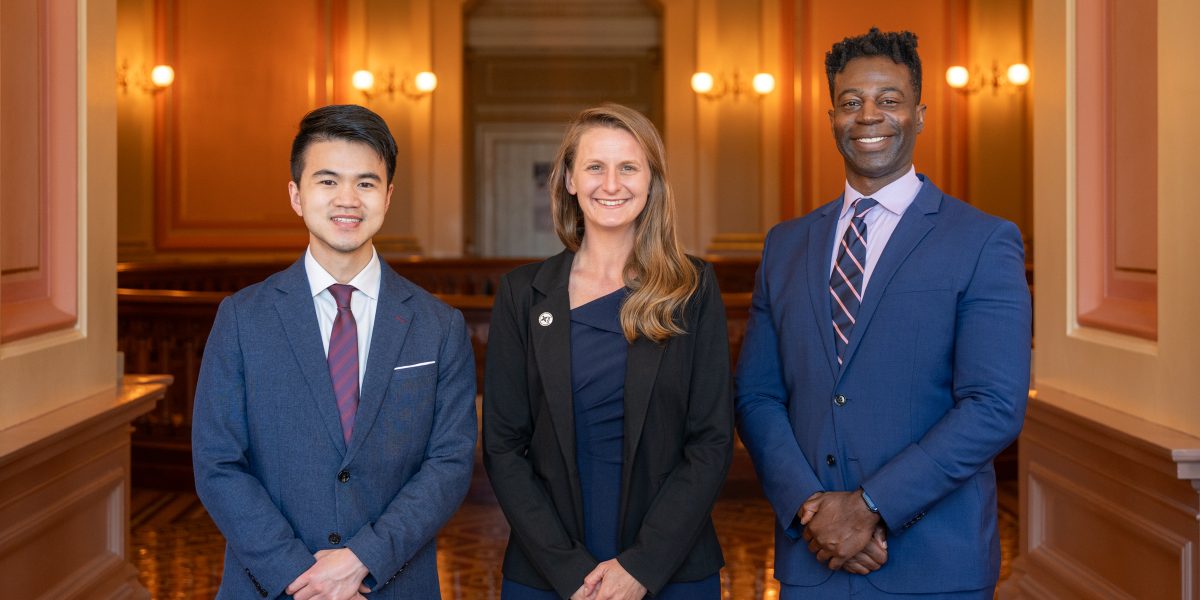
New program embeds independent AI expertise directly within California state government to support evidence-based decision-making on frontier AI safety and risk management.
Sacramento, July 07, 2026 (GLOBE NEWSWIRE) — The California Council on Science and Technology (CCST) announced the launch of its AI Science Residency Program, a new initiative that places highly qualified AI experts directly within California state government agencies. The two inaugural AI Science Advisors were placed at the California Governor’s Office of Emergency Services (Cal OES) and the California Department of Technology (CDT) to advise on frontier AI safety.
The placements come as California and other states work to govern the most advanced AI systems responsibly to reduce risks to public health or safety. By embedding independent AI experts within Cal OES and CDT, CCST is helping state leaders apply rigorous scientific expertise to evaluate emerging AI risks, analyze safety incidents, support implementation of new AI safety laws and improve frontier AI risk management. The advisors began their residencies in June 2026.
“We are proud to launch CCST’s AI Science Residency Program with these two world-class placements,” said Julianne McCall, PhD, CEO of CCST. “California is leading the nation on AI governance, in large part thanks to exceptional talent committed to AI safety and public service – and we’re grateful to the many outstanding candidates who applied. As frontier AI development and governance rapidly evolve, good policy relies on a deep partnership between governance officials and cutting-edge technical expertise. This program connects California agencies with the top-tier AI talent they need to evaluate and advise on emerging risks, helping ensure technology serves the public good.”
The AI Science Residency program focuses on placing frontier AI expertise in the executive branch and is part of CCST’s Science Residency Program, which brings senior-level scientific and technical experts into California state government. The Science Residency Program draws on 17 years of experience running CCST’s flagship Science & Technology Policy Fellowship, which has placed more than 200 PhD-level scientists in the legislative and executive branch. CCST modeled the Science Residency program after the role of Science Advisor to the President via the White House Office of Science and Technology Policy (OSTP).
AI Science Advisor to the California Governor’s Office of Emergency Services

Michael Chen
As the AI Science Advisor to the California Governor’s Office of Emergency Services (Cal OES), Michael Chen will advise senior leadership on frontier AI safety and risk assessment, with a particular emphasis on critical safety incidents, AI and cyber defense, and risk from developers’ internal deployment of AI, such as sabotage by AI agents and automated AI R&D. As Science Advisor, he will also coordinate with AI governance leads across California’s state government and facilitate cross-sector collaboration with the academic research community, the private sector, and community and nonprofit organizations.
Michael previously worked on evaluations-based AI governance at METR, an independent California-based nonprofit evaluator of autonomous AI agent capabilities and risks. He advised leading AI developers on frameworks for assessing, mitigating, and transparently disclosing catastrophic AI risks. He also assisted with third-party evaluations, including a review of a developer’s report assessing sabotage risk from AI agents, and contributed to a catalog of incidents in which AI agents acted beyond their operators’ intent. Michael has engaged with U.S. government bodies on frontier AI evaluation, including the Center for AI Standards and Innovation (CAISI) at the National Institute of Standards and Technology (NIST), and conducted research at UC Berkeley’s Center for Human-Compatible AI on learning human preferences for language models. His research and commentary on AI have been covered in outlets such as Time, The Guardian, and MIT Technology Review. Michael is a part-time PhD student at the University of Oxford and an affiliate of the Oxford Martin AI Governance Initiative.
As AI Science Advisor to Cal OES, Michael reports to Commander of the California Cybersecurity Integration Center (Cal-CSIC) Matthew Sage and works closely with the Homeland Security Cyber Policy Team.
“Having a dedicated AI Science Advisor embedded within Cal OES will meaningfully strengthen our capacity to respond to the rapidly evolving frontier AI risk landscape,” said Commander Matthew Sage. “AI presents both tremendous opportunities and serious risks for emergency management and public safety. Michael’s expertise in evaluating AI systems and managing risks will help us collect, analyze, and respond to evolving AI risks and safety incidents. CCST has been an invaluable partner in facilitating a rigorous recruitment process to meet our needs.”
“AI agents are learning to autonomously execute exponentially more complex projects over time,” said Michael Chen. “That now includes cyberattacks and will pose risks for critical infrastructure. At Cal OES, I look forward to working with frontier developers in reviewing assessments of risk from their internal use of frontier models. I’m also excited to help California prepare thoughtful, proactive response plans and playbooks for frontier AI risks.”
AI Science Advisor to the California Department of Technology

Justin Norman, PhD
As AI Science Advisor to the California Department of Technology (CDT), Justin Norman, PhD, will advise senior leadership on how developments in frontier AI development and governance impact key definitions and thresholds in California frontier AI safety legislation. He will contribute to recommendations on frontier AI safety to the California Legislature and coordinate with a wide range of stakeholders, including government agencies, the academic research community, federal labs, the private sector, and community and nonprofit organizations, among others.
Justin is an AI/ML engineer who brings 20+ years of applied technical and executive leadership experience across both the government and the private sector. He previously served as acting Portfolio Director and Technical Director for Artificial Intelligence & Machine Learning at the Defense Innovation Unit. He was also the CTO/Deputy Director of the United States Indo-Pacific Command Joint Mission Accelerator Directorate, appointed as a member of the Department of the Navy’s Science and Technology Board federal advisory committee, and continues to serve as a Lieutenant Colonel in the United States Marine Corps reserve. In his senior leadership roles in industry, he led more than 100 scientists, machine learning engineers, and product managers as CTO and Head of AI at Vera AI, Vice President of Data Science, Analytics and Data Products at Yelp, Director of Research and ML/AI Cloudera Fast Forward Labs, and Global Head of Cisco’s Enterprise Data Science Office, among others.
Justin completed his PhD at UC Berkeley’s School of Information, where he served on the Digital Security, Safety, and Trust Search Committee and as Technical Director of the Public Interest Technology Clinic. His research focuses on the evaluation and robustness of generative AI systems—including LLMs, VLMs, and generative computer vision—as well as deepfake detection and content authenticity. He also holds an MBA from USC Marshall, a BS in Computer Science from the United States Naval Academy, and is a recipient of the Marcus Foster Fellowship and the FASPE Design & Technology Fellowship.
“We’re thrilled to partner with CCST on this new program,” said Government Operations Secretary Nick Maduros. “We’re looking forward to working with these incredible advisors to help the state navigate emerging issues around artificial intelligence.”
“I am honored to join CDT at this pivotal moment for AI governance,” said Justin Norman, PhD. “California has the opportunity — and the responsibility — to demonstrate that governments can produce effective technically and socially grounded AI policy that still supports rapid innovation. I look forward to supporting CDT’s leadership in translating the latest science and technical evidence into practical, effective policy that protects Californians and builds public trust in AI.”
The AI Science Residency Program is part of the CCST AI Policy Initiative. It follows the January 2026 launch of CCST’s Science Residency Program, which placed an inaugural Science Advisor to the California Natural Resources Secretary. AI Science Advisors are formally employed by CCST and placed in their respective agencies through a memorandum of understanding, ensuring an independent scientific perspective while enabling full integration within agency leadership teams.
For more information about the AI Science Residency Program, contact Program Manager Henriette Canino, PhD, at [email protected].
About CCST
The California Council on Science and Technology is a nonpartisan, nonprofit organization that serves as a trusted source of expert science and technology advice for California policymakers—powered by a world-class partner network. CCST was established via a unanimous vote of the California Legislature in 1988 to make California’s policies stronger with science and technology.
About Cal OES
The Governor’s Office of Emergency Services (Cal OES) serves as the state’s leadership hub during all major emergencies and disasters. This includes responding, directing, and coordinating state and federal resources and mutual aid assets across all regions to support the diverse communities across the state.
Cal OES also supports local jurisdictions and communities through planning and preparedness activities and training, and facilitating the immediate response to an emergency through the longer‐term recovery phase. During this process, Cal OES serves as the state’s overall coordinator and agent to secure federal government resources through the Federal Emergency Management Agency.
About CDT
The California Department of Technology serves as the custodian of public data, an innovator in IT services and solutions, overseeing policy development, facilitating collaboration across agencies, ensuring effective IT project management, safeguarding information integrity, delivering technological services, and championing advocacy efforts.
Contact Info
Keleigh Friedrich
[email protected]
+1 916-402-4031
 Disclaimer: The above press release comes to you under an arrangement with GlobeNewswire. UKNewshour.com takes no editorial responsibility for the same.
