Ensuring safety for players and fans at the FIFA World Cup 2026

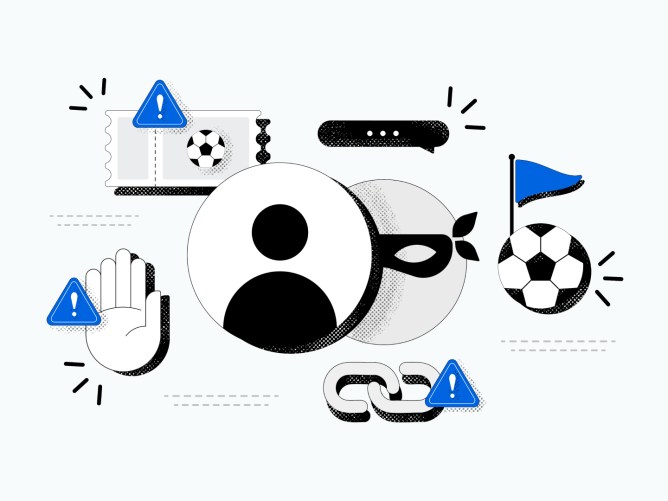
In the upcoming months, soccer enthusiasts worldwide will be using our applications to engage with the FIFA World Cup 2026. Although most will cheer on their preferred teams and players, there may be individuals who attempt to deceive or mistreat others both offline and online.
Fighting Scams
Scammers are continuously adapting their methods, and so are we. We have recently committed to new investments in advanced AI, tools to help people identify and avoid scams, and collaborations with law enforcement and industry peers to take action against scammers. Global sporting events often see a rise in fraud, including ticket scams, false immigration offers, and misleading travel accommodations for those attending matches. Our dedicated teams are actively monitoring and addressing accounts that try to exploit people through these scams and that breach our policies.
Recognizing that scammers rarely confine their activities to a single platform, we’re collaborating across the industry to disrupt scam networks via the Global Signal Exchange (GSE) and Meta’s Fraud Intelligence Reciprocal Exchange (FIRE). Through the GSE, Meta worked with Visa to proactively tackle cross-channel fraud. Visa’s Scam Disruption team provided crucial scam intelligence that helped Meta identify and dismantle a network on Facebook linked to fake websites mimicking FIFA World Cup 2026 branding and promoting fraudulent gambling content. These sites advertised unrealistically high win rates and attempted to collect personal or financial information from users.
We remain committed to working with our partners to stay ahead of evolving scam tactics leading up to, during, and after the FIFA World Cup.
Educating Consumers
Beginning this week, we are introducing a Facebook pop-up notification to remind users to obtain tickets from reliable sources throughout the tournament. When users search for terms related to FIFA World Cup tickets on Facebook or visit related groups, we will provide reminders on what to check before purchasing tickets and share links to our reporting tool for suspicious content or accounts.
We continue to invest in consumer education with our partners to help individuals recognize and avoid scams online. We support organizations such as the Canadian Anti-Fraud Centre (CAFC) and Stand Against Scams, which leads the Canadian Anti‑Scam Coalition’s national awareness campaign. We are also partnering with Mexico’s Consumer Protection Agency (PROFECO) to launch a campaign led by creators to raise awareness about common scams expected during the tournament, such as fake ticket sales and fake FIFA World Cup website impersonations.
Preventing Abuse
We maintain clear policies against bullying, harassment, violent threats, and hateful behavior toward both players and fans. We use community reports and AI technology to proactively detect and remove content that violates our policies. From October to December 2025, we removed 2.6 million pieces of hateful content on Facebook and Instagram, of which more than 74% were detected before being reported by users. We actively engage with players, teams, and associations worldwide to keep them informed about our latest safety measures and listen to their feedback.
In addition to identifying and removing harmful content, we continue to enhance features to help users stay safe on our apps. Features such as Restrict and tag and mention controls on Facebook and Instagram help reduce unwanted interactions. Professional accounts on Facebook can use Moderation Assist to control which comments appear based on criteria like new comments with images or links. Users on Instagram can turn off direct message requests from those they do not follow and report suspicious messages. While some public figures prefer to keep message requests open to engage with their community, we have developed additional safety tools for them.
One such tool, Hidden Words, is an Instagram feature that automatically filters offensive comments or DM requests containing undesirable words, phrases, emojis, and spam. Users can choose to hide ‘some’ comments or ‘more’ for higher protection levels and customize their list of hidden words. Facebook plans to introduce similar settings to help World Cup athletes and teams filter out potentially offensive comments.
Another feature, Limit Interactions, allows temporary restrictions on comments and direct messages from specific groups, such as those who do not follow the user or have recently followed. This is particularly helpful for public figures experiencing sudden spikes in comments or messages related to public events.
We have strengthened our blocking and abuse prevention measures to make it harder for offenders to reach people by creating new profiles. Nudges on Instagram prompt users to reconsider before posting potentially hurtful content.
We remain dedicated to developing tools that protect our community and collaborating with officials to ensure our platforms are safe for both players and fans.